Liposuction Michigan and Customized Contouring Strategies
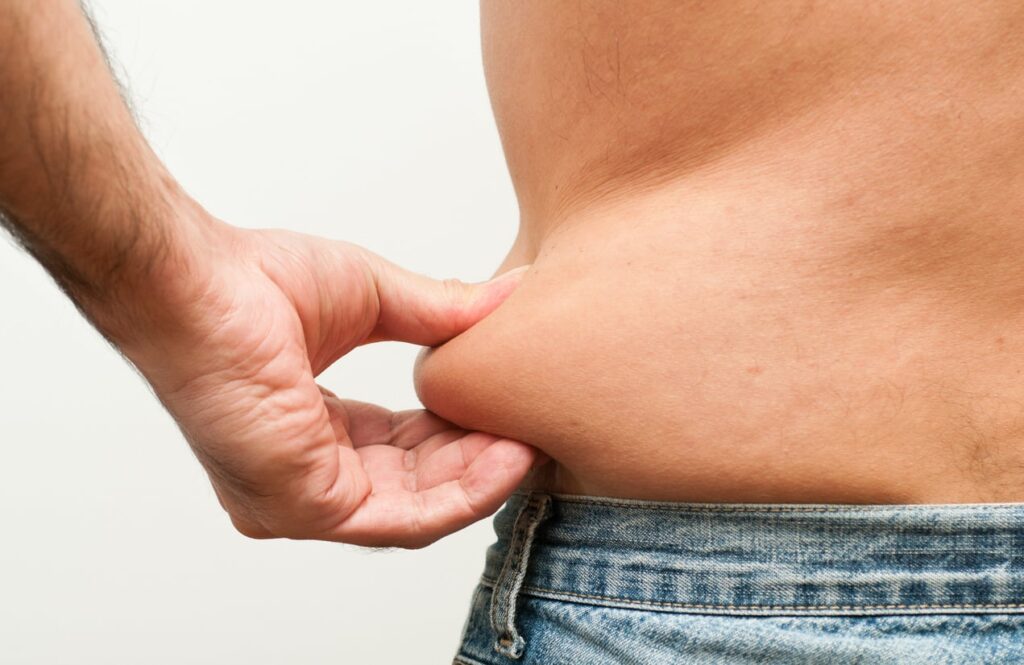
Body contouring is rarely about a single stubborn spot. In practice, it is usually about proportion. A patient may come in focused on fullness under the chin, a softer midsection, or outer thighs that never seem to change despite steady workouts, but the real planning starts when those concerns are viewed in relation to the rest of the body. That is where liposuction earns its reputation. Done well, it is not just fat removal. It is reshaping.
For patients researching Liposuction Michigan options, the most useful shift in mindset is this: the best result is usually not the most aggressive one. It is the one that fits your anatomy, your skin quality, your health, and your long term maintenance habits. Customization matters more than trend, and restraint often produces the most elegant outcome.
Michigan patients bring their own practical considerations to this discussion. Seasonal wardrobes reveal different concerns at different times of year. Winters can hide areas people have ignored for months, while spring tends to trigger a rush of consultations before summer events, vacations, and weddings. Recovery planning also looks a little different when you are navigating icy sidewalks, layered clothing, and long commutes. These are not cosmetic footnotes. They affect timing, comfort, and the overall surgical plan.
What liposuction actually changes
Liposuction removes localized fat deposits that have not responded to reasonable diet and exercise. It can sharpen the waist, flatten the lower abdomen, reduce fullness at the flanks, refine the upper arms, and improve transitions between adjacent areas. The keyword there is transitions. Most attractive contouring results come from smoothing the way one zone flows into the next.
This is why experienced surgeons rarely look at one area in isolation. Treating the abdomen without considering the flanks can leave the torso looking unfinished. Addressing the neck without evaluating jawline support and skin elasticity can create only a partial improvement. Removing too much from the outer thighs can disrupt the natural balance between hip and leg. Good contouring requires a sculptor’s eye, not just a suction device.
Liposuction is also not a substitute for weight loss. That distinction matters because expectations tend to set the tone for the entire experience. Patients who are close to a stable weight usually benefit most. They can see the contour difference more clearly, and the result is easier to maintain. If someone is planning a significant weight change after surgery, it often makes sense to address that first.
The case for customization
There is no universal liposuction plan, even among patients with similar clothing sizes. Two people may both dislike lower abdominal fullness, yet need completely different strategies. One may have dense subcutaneous fat with good skin snap and a well defined waist underneath. Another may have mild fat but more skin laxity after pregnancies or major weight changes. The first may do beautifully with targeted liposuction alone. The second may see only modest improvement unless skin tightening or excisional surgery is part of the conversation.
Customization starts with three variables that matter more than patients sometimes realize: fat distribution, skin quality, and structural anatomy. Fat distribution determines where contour can realistically change. Skin quality determines how well the tissues will drape afterward. Structural anatomy, including rib shape, pelvic width, muscle tone, and asymmetry, determines the limits of the result. You can refine the frame, but you cannot replace it.
This is where seasoned judgment shows. The safest and most satisfying plan is not necessarily the one that treats the most areas. It is the one that creates the clearest visual improvement while respecting what the body can heal from predictably.
Common treatment patterns in Michigan practices
In a Michigan setting, the most frequent requests tend to cluster around a handful of areas. The abdomen and flanks remain perennial favorites because they affect the way nearly every pair of jeans, slacks, and fitted dresses sit on the body. Submental fullness, often called the double chin, has become more common as patients pay more attention to profile views on video calls and photos. Arms, inner thighs, bra line fullness, and the lower back also come up often, particularly in patients who maintain a healthy lifestyle but still feel broad or heavy in very specific places.
What matters is not simply which area bothers the patient most, but which area will produce the best return when treated. Sometimes that means shifting focus. A person who asks about lower belly fullness may actually benefit more from flank contouring because the waist is what gives the abdomen a flatter appearance. Another person may think they need aggressive thigh reduction when what they really Liposuction Michigan want is better balance between inner thigh fullness and the knee area.
That is one of the reasons consultations can feel more nuanced than patients expect. The answer is not always yes to the exact request, nor is it a flat no. Often it is, “Yes, but the best version of this result comes from a broader contour plan.”
Technique matters, but planning matters more
Patients often ask about the type of liposuction used, whether tumescent, power assisted, ultrasound assisted, or laser based approaches. These distinctions have value, but in everyday outcomes, planning and execution usually matter more than brand names or device marketing.
Tumescent infiltration, where fluid is placed to reduce bleeding and improve fat removal, is a standard part of many modern approaches. Power assisted liposuction can be useful in fibrous areas, such as the back or male chest, because it helps break up denser tissue. Energy based adjuncts may have a role in select cases, especially when modest skin contraction is desirable. Yet none of these tools can rescue poor candidacy or rushed judgment.
A careful surgeon thinks in layers and depth. Remove fat too superficially and you increase the risk of irregularities. Stay too deep or too conservative and the result may be underwhelming. Overdo one side by a small margin and asymmetry becomes noticeable, especially under fitted clothing. The body is forgiving in some zones and very unforgiving in others. The neck, inner thighs, and areas near natural depressions require a measured hand.
This is why “more” should never be confused with “better.” Patients often fear undercorrection, but overresection can be much harder to fix.
Skin elasticity, the silent deciding factor
If there is one variable that quietly determines whether liposuction looks crisp or merely improved, it is skin elasticity. Fat can be removed, but skin must contract to reveal the new contour. Younger patients often have an advantage here, but age alone is not the whole story. Sun exposure, smoking history, genetics, pregnancy, weight fluctuations, and prior procedures all influence tissue behavior.
A patient in their forties with stable weight and good skin tone may be a stronger liposuction candidate than a younger patient with substantial laxity after weight loss. This is where honest consultation can save disappointment. Many people are suitable candidates for contouring, but not all are good candidates for liposuction alone.
When laxity is mild, a surgeon may still proceed, while explaining that the result will be contour improvement rather than skin tightening. When laxity is moderate to significant, combining procedures or changing course entirely may produce a far better result. Abdominoplasty is the classic example. Liposuction can debulk the abdomen and flanks, but if loose skin and muscle separation are the main issues, a tummy tuck addresses what liposuction cannot.
Combining areas without overdoing surgery
There is an understandable temptation to treat every bothersome zone at once. Patients who have arranged time off work and organized home support often want to maximize the opportunity. Sometimes that is appropriate. Sometimes it is not.
The decision depends on total aspirate volume, operative time, medical history, mobility during recovery, and the physical demands of the patient’s daily life. A healthy person treating a few moderate areas may do very well with a combined approach. Another patient may be better served by staging procedures to preserve safety and recovery quality.
A customized contouring strategy often favors harmony over quantity. Sculpting the abdomen and flanks together frequently creates more visible change than adding smaller, marginal areas simply because they are available to treat. The neck and jawline can transform facial profile with relatively modest intervention. Arms may be highly worthwhile for one patient, while for another they add swelling and compression garment challenges without changing how the body looks in clothing.
This is an area where mature surgical judgment pays off. It is easy to create a long wish list. It is harder, and more valuable, to identify the two or three areas that will make the whole silhouette look better.
What recovery is really like
Recovery is usually more tolerable than first time patients fear, but it is not effortless. Soreness often feels more like deep bruising and muscular stiffness than sharp pain. Swelling is the main event. Drainage from small incisions can occur early on, especially with tumescent techniques, and compression garments become part of daily life for a period of time.
Most patients are up and walking quickly, which is good for circulation and general recovery. Still, looking “finished” takes patience. The first week is about getting through the inflammatory phase. The next few weeks are when puffiness starts to settle, though some areas stay firm or numb longer than patients expect. Final definition can continue to emerge over several months.
Michigan seasons influence comfort here in subtle ways. Compression garments under winter clothing are often easier to conceal, but bulkier layers can make mobility and dressing more cumbersome in the first several days. Summer recovery can be simpler socially if lighter schedules allow more rest, but heat makes garments feel less pleasant. Timing surgery around work, family responsibilities, and climate is practical, not vain.
A few recovery priorities consistently make the process smoother:
- Plan for reduced pace during the first several days, even if you feel capable.
- Wear compression exactly as directed, because it helps shape the early healing environment.
- Walk regularly, but avoid turning early energy into overactivity.
- Keep expectations steady, swelling can distort the appearance before it reveals it.
- Stay in communication with your surgical team if one side seems notably different, pain escalates, or fluid concerns arise.
That kind of basic discipline often separates a smooth recovery from a frustrating one.
The difference between a good result and a believable one
The most admired body contouring usually does not announce itself. It simply makes the patient look more balanced. Waist definition appears cleaner. Clothing hangs better. Photos become less about hiding angles and more about ease. The result should make sense on the body.
This is especially important in areas where trends can distort judgment. Overly hollowed outer thighs, aggressively suctioned buttock borders, or a neck contoured beyond what the skin can support tend to look obvious over time. The body ages, gains a little weight, loses a little weight, and moves through normal life changes. A believable result is one that still looks natural under those conditions.
Patients often underestimate how much a subtle result can change self perception. One person may only drop a modest amount of measurable fat but gain a cleaner waist to hip transition that changes the way nearly every outfit fits. Another may refine the jawline just enough that profile photos stop drawing attention. These are not dramatic television moments. They are practical, durable improvements.
Who tends to be happiest with Liposuction Michigan procedures
The happiest patients are usually not the ones chasing a fantasy body. They are the ones who understand the procedure as a targeted tool. They have a stable routine, realistic expectations, and a specific contour problem. They know that surgery can improve shape, but it does not replace strength training, nutrition, or acceptance of normal anatomy.
A strong candidate generally shares several qualities:
- Weight has been fairly stable for months, not fluctuating significantly.
- The concern is localized fullness rather than generalized obesity.
- Skin has enough elasticity to retract reasonably well.
- Overall health supports surgery and recovery.
- The patient can follow aftercare without trying to shortcut it.
People who are still in the middle of major body changes, such as postpartum shifts, rapid weight loss, or a new fitness regimen, may do better by waiting. Timing matters. If the body is still settling, contour surgery is easier to judge later.
Questions worth asking at consultation
The best consultations are less about sales and more about fit. A surgeon should be able to explain not only what can be done, but what should not be done. Patients should leave with a clear sense of likely improvement, not just possibility.
Ask how the surgeon decides whether liposuction alone is enough. Ask which areas will drive the visible change and why. Ask what kind of compression and downtime are typical for your exact plan. If asymmetry already exists, ask how that affects the surgical strategy. If you are close to needing skin excision rather than fat removal alone, you want that honesty up front.
It is also reasonable to ask how often the surgeon treats your target areas and what trade offs they see most often. Someone who regularly contours the neck may discuss skin contraction and platysmal banding. Someone who frequently treats the abdomen and flanks may focus on transitions and avoiding shelf like irregularities. The language of experience is specific. It tends to sound less promotional and more measured.
Pricing, value, and the temptation to shop only by cost
Patients naturally compare fees, especially when contemplating multiple areas. Cost matters, but it should be weighed alongside safety standards, surgeon experience, anesthesia setting, aftercare support, and the complexity of the case. Liposuction is not a commodity service. The same area can require very different levels of planning and finesse from one patient to the next.
The cheapest quote may reflect fewer treated zones, less operating time, or simply a different level of expertise. The most expensive quote is not automatically the best either. Value tends to live where skill, communication, facility standards, and candid planning meet. Revision work is almost always more expensive, emotionally and financially, than doing the first operation thoughtfully.
When liposuction is the wrong answer
One of the most useful things a surgeon can say is no, or at least not this way. If the issue is loose skin, muscle laxity, poor skin quality, or body dysmorphic expectations, liposuction may not serve the patient well. If someone wants large scale weight reduction, bariatric or medically supervised weight management paths may be more appropriate first. If the patient’s health profile increases surgical risk, that deserves respect.
There are also anatomical limits. The body has natural asymmetries. Some fullness protects smooth contour over movement points like the hips and thighs. Certain inherited shapes can be refined but not erased. This does not make surgery pointless. It makes honest planning essential.
The strongest aesthetic work often comes from staying inside the boundaries of what the tissues can support. That is as true in body contouring as it is anywhere in surgery.
Lasting results depend on ordinary habits
Liposuction permanently removes fat cells from treated areas, but it does not grant immunity from future weight gain. Remaining fat cells can still enlarge, and untreated areas can still change. Patients who maintain steady habits usually preserve their contour well. Those who cycle up and down in weight may blur the definition they initially achieved.
That is not a moral statement. It is just how bodies behave. The practical lesson is simple: schedule surgery at a point when your routine is sustainable. If you have recently started exercising six days a week but are not sure that schedule will last, let life settle first. If a medication change, pregnancy plan, or major relocation is on the horizon, that timing should factor into the decision.
A customized contouring strategy works best when it fits real life, not an idealized season of motivation.
The real promise of thoughtful contouring
For the right patient, Liposuction Michigan care can be precise, highly satisfying, and quietly transformative. Not because it changes everything, but because it changes the right things. It brings proportion where there was heaviness, definition where there was blur, and confidence where there was constant adjustment, camouflage, or frustration.
The details matter. Which areas are paired. How much is removed. Whether skin can keep up. How recovery is timed. Whether the surgeon is willing to be conservative when conservative is best. Those details are what turn a standard procedure into customized contouring.
When patients understand that body contouring is a strategy rather than a quick fix, they tend to make better decisions and get better results. That perspective is worth carrying into every consultation.
Aesthetic Plastic Surgery & Laser Center, Michelle Hardaway M.D.
27920 Orchard Lake Rd, Farmington Hills, MI 48334, United States
+1 248-221-1957
FAQ About Liposuction Michigan
Is 55 too old for liposuction?
Age 55 alone does not determine suitability. A surgeon evaluates overall health, skin quality, healing risks, and realistic goals. A personal consultation is needed to assess candidacy and discuss alternatives.
What happens 10 years after liposuction?
Contour improvements can last, especially with stable weight. Aging, pregnancy, and weight changes can alter the appearance over time. Results vary, and liposuction does not prevent future body changes.
Can lipo get rid of an apron belly?
Liposuction reduces localized fat but does not remove hanging excess skin. An apron belly may require assessment for a skin-removal procedure instead of, or alongside, fat removal. A qualified plastic surgeon can explain appropriate options and their risks.